|
Importance
|
|
Sheep is a important livestock species of India. They
contribute greatly to the agrarian economy, especially in the arid/semi-arid and mountainous
areas where crop or dairy farming are not economical. They play an important role in
the livelihood of a large percentage of small and marginal farmers and landless laborer’s
engaged in sheep rearing. A number of rural-based industries use wool and sheep skins as
raw material. Sheep manure is an important source of soil fertility, especially in
southern states.
Sheep in India are mostly maintained on natural vegetation on common grazing lands, wastelands and uncultivated (fallow) lands, stubbles of cultivated crops and top feeds (tree loppings). Rarely are they kept on grain, cultivated fodder or crop residue. Sheep are mostly reared for wool and meat. Sheep skins and manure constitute important sources of earning, the latter particularly in southern India. Milk from sheep is of limited importance and that too in very limited areas of Jammu and Kashmir, Rajasthan and Gujarat. Indian sheep are not regarded as dairy sheep.
The productivity of Indian sheep is lower than those of agriculturally more advanced countries. Yet considering their nutritional and physical environment, their productivity cannot be considered as inefficient. The major reasons for low productivity are inadequate grazing resources, diseases causing high mortality, morbidity and consequent reduced production, and serious lack of organized effort for bringing genetic improvement.
|
|
|
- Medium-sized animals, predominantly black or black with white markings; white and brown/fawn animals are also seen.
- In a Maharashtra survey, distribution of colour was 54.92% completely black, 21% black with white or brown spots on head and 24% black or white with brown spots.
- Rams are horned but ewes are polled.
- Ears are medium long, flat and drooping.
- Tail is short and thin.
- Fleece is extremely coarse, hairy and open.
- Belly and legs are devoid of wool.
- Dressing percentage on the basis of pre-slaughter live-weight: 49.6 ± 1.8; age at slaughter: 6 months
|
|
|
- Distributed in Nellore district and neighbouring areas of Prakasham and Ongole districts of Andhra Pradesh.
- Relatively tall animals with little hair except at brisket, withers and breech.
- The rams are horned; the ewes are almost always polled.
- The ears are long and drooping.
- The tail is short and thin
- 86% of the animals carry wattles.
- Three varieties are distinguished, primarily on the basis of colour:
- Palla: completely white or white with light brown spots on head, neck, back and legs;
- Jodipi (also called “Jodimpu”): white with black spots, particularly around the lips, eyes and lower jaw, but also on belly and legs;
- Dora: completely brown. A survey of 279 sheep showed 52.7% Palla, 34.04% Jodipi, and 13.43% Dora.
- Adult male weighs about 36.69 ± 2.56 kg and female about 30.00 ± 0.27 kg
- Dressing percentage on pre-slaughter live-weight basis: 47.00; feed conversion efficiency: 15.06%
|
|
|
- (Also known as Bannur and Bandur)
- Distribution. Mandya district and bordering Mysore district of Karnataka.Relatively small animals.
- Colour is white, but in some cases face is light brown, and this colour may extend to the neck.
- Compact body with a typical reversed U-shape conformation from the rear.
- Ears are long, leafy and drooping.
- Tail is short and thin.
- A large percentage of animals carry wattles.
- Slightly Roman nose.
- Both sexes are polled.
- Coat is extremely coarse and hairy.
- Dressing percentage on pre-slaughter live-weight basis for animals slaughtered at 12 months: 48.88 ± 3.78 feed conversion efficiency in individual feed-lot, from 3 to 6 months: 9.62%.
|
|
|
|
The sheep genetic group is popularly known as Macherla sheep and attained its local name based on the native tract i.e., Macherla area of
Guntur district and distributed in Krishna, Prakasham of A.P and Nagar Kurnool and Nalgonda districts of Telangana state. Macherla sheep constitutes about 3.02%
of total sheep population of Andhra Pradesh and 0.7% of total sheep population of India (DAHD 2019).
The predominant coat color pattern in Macherla sheep was bi-color of black and white (44.41%) followed by brown and white (35.65%),
brown (18.64%) and black (1.88%).
Similar to Nellore sheep breed, Macherla sheep is also a hairy type sheep, but the hair is relatively more in this genetic group.
A thick and dense bundle of hair growth, predominantly on neck and dewlap regions followed by brisket, back and thigh region was evident in
adult rams providing elegant look.
The predominant head profile in both sexes is prominently convex and ears were pendulous.
The males are horned, and females are polled.
Adult male weighs about 53.25±0.98 kg and female about 43.14±0.46 kg
|
|
|
|
The breed derived its name after Osmanabad district of Maharashtra. The breed is known for early maturity, prolificacy and good dressing
percentage
Color:Predominant color is black. White color is noticed only on ears and some spots on neck and forehead. Some animals are reddish in color.
Horns Present:Both sexes
Number of Horns:2
Horns Shape and Size: Horns are straight/ curved and small in size (about 13 cm)running backward, upward and downward.
Visible Characteristics:Five types of animals are available:
- Entirely black with horns
- Entirely black with white ears and horns
- Entirely black and polled
- Entirely black, white ears and polled
- Brown and white patches from the face to lower side of the body
Weight(Avg Kg): Male - 33.66kg and female:32.52Kg
|
|
|
|
|
The breed is distributed throughout West Bengal and adjoining parts of neighboring states viz. Bihar, Jharkhand, Orissa, Assam and Tripura. Skins are of excellent quality and are highly priced.
Color:Predominantly black, brown, grey and white are also found.
Horns Present:Both
Number of Horns:2
Horns Shape and Size: Small in size (<15), directed upward and sometime backward.
Visible Characteristics: Small-legged goat. Hair coat is short and lustrous. Nose line is slightly depressed.
Weight (Avg Kg):Male -32.37 and female 20.38Kg
|
|
|
|
Origin: Two opinions exist. It may have originated from the City Berbera of Somalia in E.Africa or from Egypt as goat keepers are called Barberia there. Breeding tract is Uttar Pradesh and Rajasthan. Barbari breed is prolific and non seasonal. It is well suited for rearing under restrained and stall feeding condition
Colour:White with tan spots, black spots in few.
Horns Present Both
Number of Horns:2
Horns Shape and Size Horns are twisted, directed upward and outward. Large in size.
Visible Characteristics Small sized animals, twisted horns. Ears - small and erect, tubular or almost tubular with slit.
Weight (Avg Kg): Male -36.7 and female 20.3Kg
|
|
|
|
Breed is named after natural habitat around river Yamuna of Uttar Pradesh. The breed is known to be best dairy goat of South East Asia and is tallest goat breed of the country. These goats are ideally suited for grazing than stall feeding conditions.
Colour:White with patches of tan mostly on head and neck.
Horns Present Both
Number of Horns:2
Horns Shape and Size Small, sword shaped running backward and upward.
Visible Characteristics:Face is large and convex having tuft of hairs. Ears are long (about 30cm) flat and drooping.
Milk yield per lactation(kg): 201.96
|
|
|
|
Origin: Sirohi district of Rajasthan
Colour:Coat colour is predominantly brown with light or dark brown patches.
Horns Present Both
Number of Horns:2
Horns Shape and Size Horns are slightly twisted and curved, directed upward and backward. Small in size (<15cm). Some polled animals are also present.
Visible Characteristics:Flat and leaf like drooping ears.
Weight (Avg Kg): Male -42.83 and female 35.27 Kg
|
|
|
|
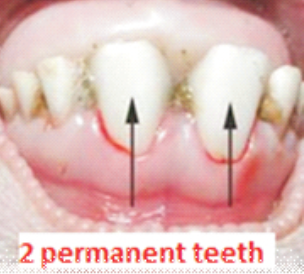
Breed of sheep should be selected on the basis of several priorities. First of all, the purpose of sheep unit should be prioritized. Most of the sheep units are established primarily for mutton production. Heavy weight breeds like Nellore, Deccani, Mandya, Mecheri, Madras Red, Malpura, Muzaffarnagri, etc. can be chosen for mutton production based on availability in the native tract or surrounding areas. Preference shall always be given to the native sheep breeds or at least with similar agro-geological conditions to avoid stress. At the initiation, one needs to start with a modest number of 2 to 3 breeding males, 40 to 50 breeding females and followers. Breeding male should be true to breed and preferably 1 to 2 years of age. In the field flocks, it is difficult to determine the age accurately and thus dentition pattern can be used. Usually 2 teeth (nearly 1 year of age)rams should be purchased for breeding purpose. Female stock should be young, preferably with milk teeth or maximum with 2 permanent teeth (1 year). Preference should be given for purchase of animals from government Sheep Breeding Farms or from reputed breeders in the villages. The price of sheep depends on breed, age and health status.
|
×
![]()
|
|
The mutton type in characterized by a deep, wide, blocky body with symmetry, balance, breed character, thick fleshing, a
strong constitution, and quality. In selection of the mutton quality animal one should actually look for the carcass characteristics which are defined
by the tenderness and juiciness of the mutton, high proportion of lean-to fat, higher proportion of meat to bone ratio etc. Since these characteristics
may not be known till the animals are slaughtered; the animal breeder has to depend on indirect measurements of such qualities. Breed type: refers to
the breed chosen for the mutton production Fleece and skin: these are of minor importance. Pink skin is supposed to be a sign of good health, quality
and a god feeder. A long, clean, bright and dense fleece with a medium amount of crimp and pink skin is usually an acceptable type among most medium
wool breeds.Constitution: It is evidenced by strong head with breed characters, strong back and loin, and by all four evenly placed legs. Natural fleshing
and finish: While fleshing is an inherited character, finish is the result of proper feeding. A lamb should have a deep covering of natural fleshing
and fat which spreads firmly and fully over the shoulder, ribs, back, lion, rump and legs.
|
- clean-cut, well-shaped head covered with fine wool
- bone of ample size and clean joints
- firm and evenly distributed flesh
- good, light, dense fleece
- symmetrically balanced body
|
Rams with masculine characters should have strong, bold head and neck, massive and powerful appearance, and bold carriage for being a potent sire.
A sheep with feminine characters should throughout have fineness of features with maternal instinct.
|
It is defined as blending together of all the components of an individual in harmonious fashion which should be uniform in width, depth, fleshing,
character and quality.
|
It is manifested by an erect and well-set head and neck alert action and pleasing disposition
|
It should be proper as per age, sex and breed. The breeder should supplement the information by indirect judging with the information on full-sibs,
for utilization in selection. Progeny testing of rams may also be useful. As mutton traits are highly heritable, individual selection should be
used for fat lamb production.
|
|