|
|
|
Brooding Management
|
×
![]()
|
|
Senior Scientist &Head, Poultry Research Station, PVNRTVU, Rajendranagar, Hyderabad-30
Senior Scientist &Head, Livestock Research Station, PVNRTVU, Mamnoor, Warangal
ICAR-Directorate of Poultry Research, Rajendranagar, Hyderabad-30
|
|
|
Brooding/nursery management (up to six weeks)
|
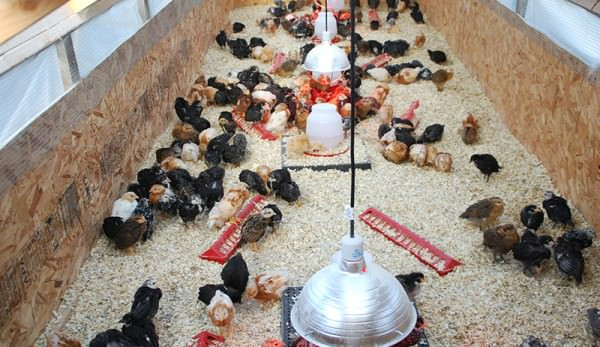
- Brooding care of chicks ensures constant body temperature and protection from predators.
- The brooder house floor must have a uniform 1-2 inch spread of clean litter like sawdust, paddy husk, rice husk, coconut husk, etc.
- Litter absorbs moisture from poultry droppings and provides warmth in winter and coolness in summer.
- Rake the litter frequently and treat it with slaked lime to avoid caking. Remove moist litter and replace it with fresh litter
- Spread newspapers on the litter to prevent chicks from feeding on it till they are accustomed to differentiate litter from feed.
- Rear the chicks on standard chick starter ration.
- Brooding can be natural or artificial; the former involves a broody hen and the latter may involve heat sources, reflectors, electric bulbs, etc.
- Secure the brooding area with a brooder guard/ chick guard made of cardboard sheet, GI sheet,wire mesh, mats, etc to restrict bird movement close to the heat source.
|
|
×
![]()
|
|
|
Managing adult birds after six weeks
|
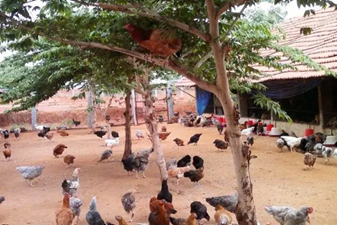
- Let the birds free to forage/scavenge during the day; provide them shelter during night.
- Provide clean drinking water before letting them out.
- The preferred flock size is 12-15 birds per household depending on the area and natural food available
- Extra roosters can be reared separately and marketed for meat.
- Night shelters should be well ventilated, have adequate light and protection from predators.
|
|
|
|
|
|