P.V. NARSIMHA RAO TELANGANA VETERINARY UNIVERSITY
RAJENDRANAGAR,HYDERABAD
Feeding Management
  • Should be reared on standard chick starter ration during the initial six weeks under nursery rearing or brooding.
  • In the second growing stage, besides th e feed material available in free range, provide natural food or greens like waste grains, germinated seeds, mulberry leaves, azolla, drumstick leaves and subabul leaves (high protein sources).
  • Extra feed will depend on the free range available, intensity of vegetation, availability of waste grains, insects, etc
  • Under free range conditions, the birds meet their protein requirements through scavenging, but the risk of energy deficiency is common. Feeding with locally available cereals like maize, sorghum, pearl millet, broken rice with equal parts of polished rice or rice bran is essential. However, the nutrient intake of scavenging birds varies with place and season, crops grown and the natural vegetation available.
  • Restrict feed at six months of age (age of sexual maturity in layers) to control the weight of the birds.
  • During the rainy season and harvest time, worms, insects and post-harvest leftovers will be plenty for the birds to feed on.
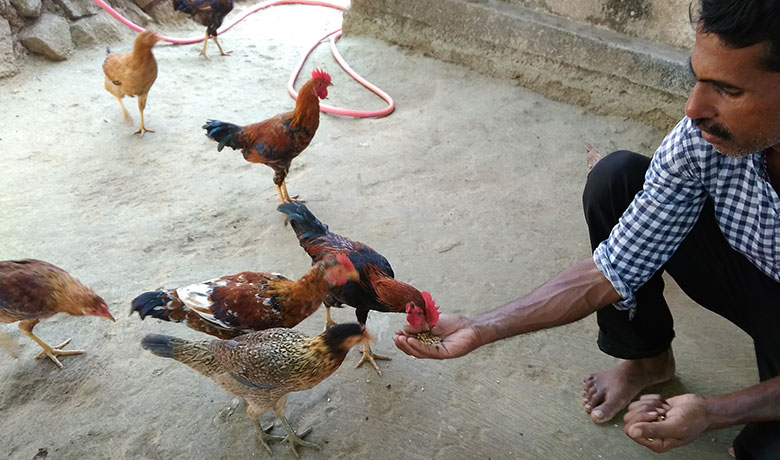
  • During the dry season of scarcity, feed supplements, including household waste (kitchen leftovers)and oilseed cakes have a positive effect on egg production and body weight of scavenging birds. A handful of grains or kitchen waste in the morning and evening can be given to supplement scavenging.
  • The scavenging feed base is very important for propagation of backyard birds. Soil type and cropping systems dominated by wheat, maize, rice, sugarcane and finger millet make up supplementary feed base.
  • Supplemental calcium sources like limestone powder, stone grit and shell grit at 4-5 gms per bird daily, especially during the laying phase, leads to a high rate of survival and good egg production.
  • Any feed of grain or household scrap should begiven inside the shelter. When regularly provided in the evening, it will help train the birds to willingly enter the enclosure before nightfall.
  • A locally available feed formulation includes:
  • 50% cereals (maize, sorghum, pearl millet, finger millet, broken rice)
  • 28% bran (rice bran, wheat bran, deoiled rice bran)
  • 20% meal/oil cakes (soybean meal, groundnut meal, sunflower meal, linseed cake, etc.)
  • 2% additives (vitamin and mineral mixture).